Idiopathic Neuropathy: Why "No Cause Found" Rarely Means Hopeless
"Idiopathic." It's the word doctors reach for when the tests come back clean and the burning in your feet doesn't. It sounds like a dead end. It usually isn't. Here's the reframe that changes everything: "no cause found" almost always means "no cause found yet" — and that's a very different thing.
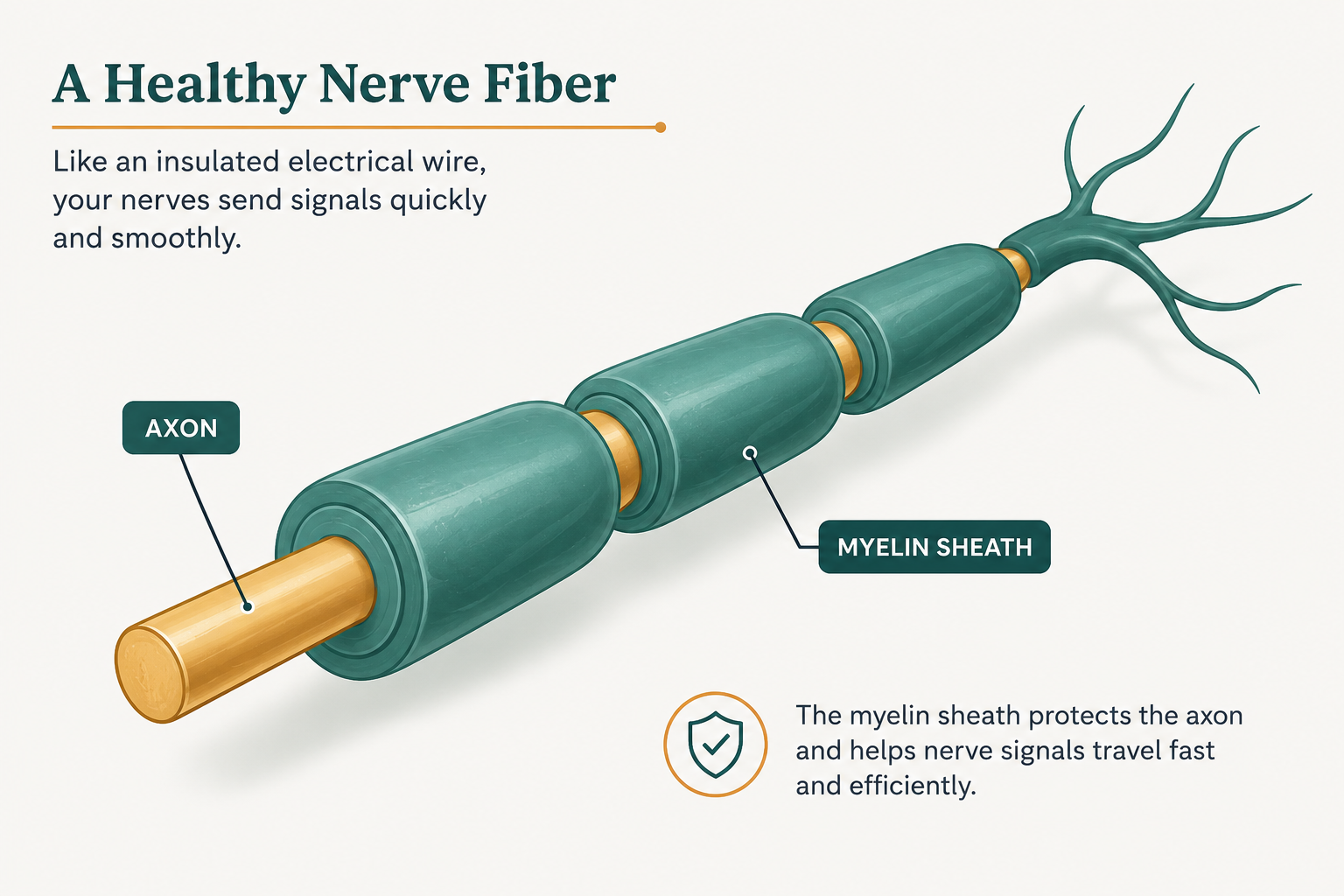
Idiopathic neuropathy is nerve damage with no identified cause after testing. It accounts for roughly 1 in 4 cases. But "idiopathic" often means the standard work-up came up empty — not that no cause exists. Hidden drivers like prediabetes, B12 deficiency, or thyroid problems are frequently found on a deeper look, and even without a named cause, you can still support nerve health and manage symptoms.
If you've been handed "idiopathic" like a shrug and a closed door, take a breath. That label is a description, not a verdict. It tells you what the first round of tests didn't find — nothing more. And there's often more to find.
What "idiopathic" actually means (and doesn't)
Strip away the Latin and "idiopathic" just means "we haven't pinned down why." It's a legitimate category — sometimes a cause genuinely can't be found. But in a rushed system, it's also the label that gets slapped on when the basic panel comes back normal and nobody digs further. The distinction matters, because one of those situations has doors you haven't tried yet.
The hidden causes that hide behind the label
Before you accept "idiopathic" as final, these are worth ruling out:
| Hidden driver | Why it gets missed |
|---|---|
| Prediabetes | A normal fasting glucose can still hide it — it takes an A1c or glucose tolerance test |
| B12 deficiency | Symptoms hit even at "low-normal" levels the basic test waves through |
| Thyroid problems | Easy to overlook without checking |
| Autoimmune conditions | Need specific antibody testing |
| Toxin or alcohol exposure | Often not asked about in depth |
See the pattern? Several of these are testable and fixable — they just require someone to look. Our full causes guide walks through them all: what causes neuropathy in the feet and legs.
The tests worth pushing for
You're allowed to ask for a fuller work-up. Reasonable ones to raise with your doctor:
- A1c or glucose tolerance test — for hidden prediabetes
- B12, plus MMA and homocysteine — the sharper markers (why this matters)
- Thyroid panel
- Autoimmune and, when relevant, toxin screening
What you can do even when no cause is found
Here's the genuinely hopeful part: even when the cause stays hidden, you are not out of moves. The nerve still responds to nutrient support and lower inflammation — and those are levers you can pull regardless of the label. This is exactly why a growing number of people with "idiopathic" neuropathy are looking at approaches aimed at the nerve itself. Researchers have been studying one specific nutrient combination for precisely this situation.
When to see a doctor
If you've been told "idiopathic," it's reasonable to ask about a fuller work-up — especially an A1c and a proper B12 check. And get prompt care for sudden or rapidly worsening numbness or weakness, or any non-healing foot wound.
Frequently asked questions
What does idiopathic neuropathy mean?
It means nerve damage with no identified cause after testing. It's a real category — roughly 1 in 4 cases — but it often means the standard work-up came up empty, not that a cause doesn't exist. A deeper look sometimes turns one up.
Can idiopathic neuropathy be treated?
Yes — even without a named cause, you can support nerve health, manage symptoms, and chase down overlooked drivers like prediabetes or B12 deficiency. "No cause found" is not the same as "nothing can be done."
What tests should I ask for with idiopathic neuropathy?
Commonly an A1c or glucose tolerance test (for hidden prediabetes), B12 with MMA/homocysteine, thyroid, and sometimes autoimmune and toxin screening. Ask your doctor which are appropriate — a fuller work-up sometimes finds what the first one missed.
Is idiopathic neuropathy progressive?
It varies. Some cases stay stable for years, others slowly progress. Supporting nerve health and finding any hidden driver gives you the best shot at slowing it.
Does idiopathic neuropathy mean it's not diabetes?
Not necessarily. Undiagnosed prediabetes is a surprisingly common hidden driver behind "idiopathic" cases. A simple glucose test can be worth pushing for even if you've never been called diabetic.
Sources
- NINDS — Peripheral Neuropathy Fact Sheet
- Foundation for Peripheral Neuropathy — idiopathic ~23% of cases
- PubMed — prediabetes and small-fiber neuropathy
- NIH ODS — Vitamin B12 (deficiency and nerve symptoms)
This article is for general educational purposes only and is not medical advice. It has not been evaluated by the FDA and is not intended to diagnose, treat, cure, or prevent any disease. Always consult a qualified healthcare provider about your symptoms and testing.