Diabetic Neuropathy: The Symptoms to Catch Before It's Too Late
If you have diabetes, the odds are not on your side — half or more of people with it develop nerve damage. But here's what nobody stresses enough: the early signs are quiet, they come and go, and they're wildly easy to ignore until the day they stop being quiet. Catch them now, while your choices still change everything.
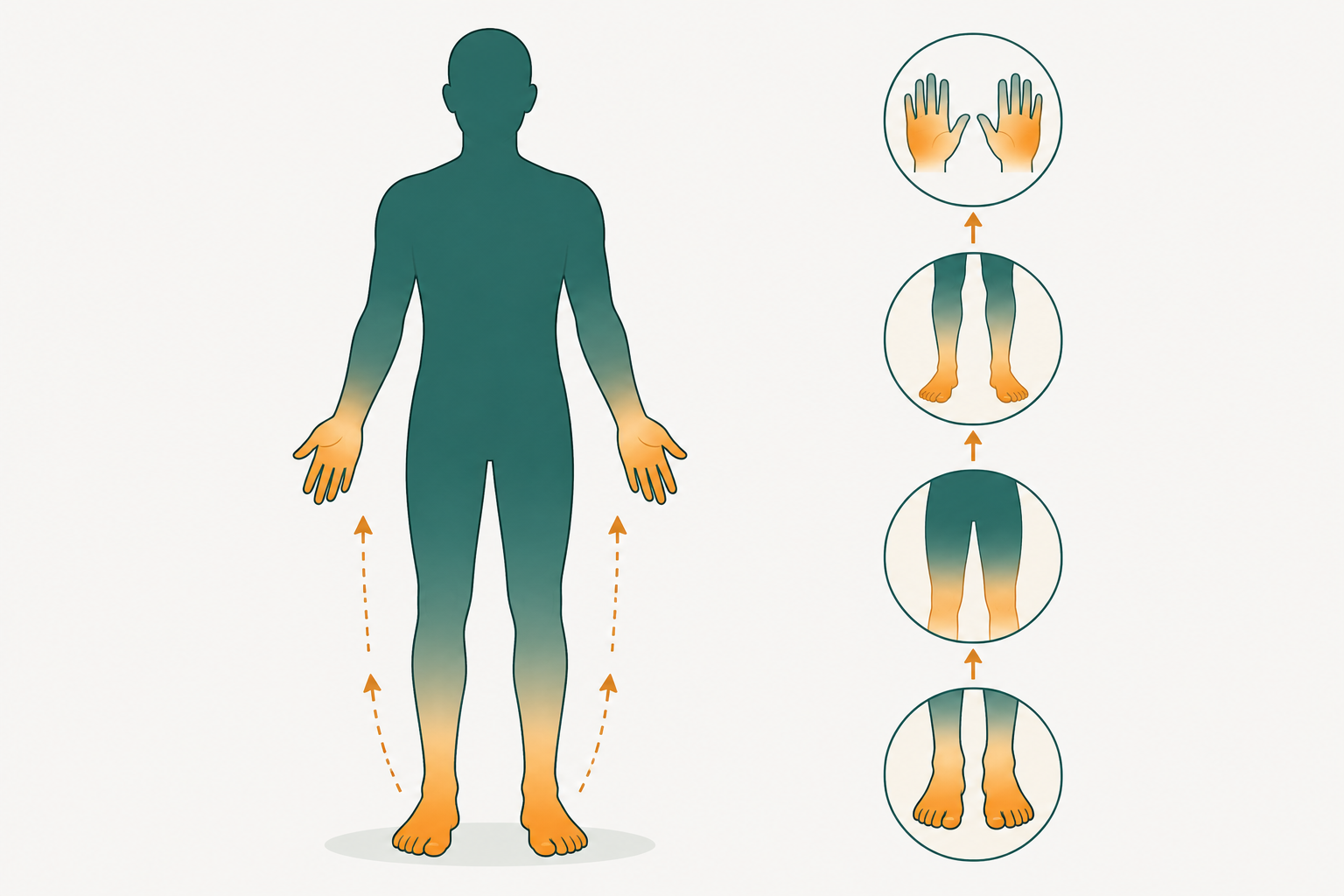
Diabetic neuropathy is nerve damage caused by high blood sugar injuring the tiny vessels that feed your nerves. It usually starts as tingling, burning, or numbness in the toes and feet, often worse at night, and can slowly spread upward. Half or more of people with diabetes develop it over their lifetime — but how tightly you control blood sugar genuinely changes how far and how fast it goes.
Most people with diabetes are braced for the eyes, the heart, the kidneys. The feet? An afterthought — until they're not. The truth is that nerve damage is one of the most common complications of diabetes, and it's also one of the most responsive to what you do next. So let's catch it early.
How diabetes quietly wrecks your nerves
High blood sugar doesn't just float around harmlessly. Over time it injures the tiny blood vessels that deliver oxygen and nutrients to your nerves — and starves the nerve. It also drives oxidative stress and inflammation that chew at the nerve's protective coating (the myelin). Strip that coating and you get the classic misfire: burning, tingling, numbness. Same stripped-wire story, lit by blood sugar.
The early signs — while you can still change the ending
- Tingling or "pins and needles" in the toes and feet
- Burning that flares at night
- Numbness or a "walking on cotton" feeling
- Sharp, electric-shock jabs
- Feet that feel oddly cold or heavy
Early on, these flicker — here after a long day, gone by morning. That on-off stage is your green light to act, because this is when tighter blood sugar control does the most to slow or stabilize the damage.
Why numbness is the dangerous part
Here's the risk nobody sugarcoats: as diabetic neuropathy advances, you stop feeling your feet. And a foot that can't feel a blister, a cut, or a pebble in your shoe is a foot that gets injured without you noticing — which is how small wounds turn into serious ones. If sensation is fading, daily foot checks stop being optional.
The metformin twist worth knowing
If you take metformin, there's a wrinkle. The drug doesn't damage nerves directly — but long-term use quietly drags down vitamin B12, and low B12 causes its own neuropathy. So you could be fighting the diabetes and a drug-driven B12 crash at the same time, and never be told. Getting your B12 checked is one of the smartest, simplest moves you can make. Here's why: can a B12 deficiency cause neuropathy?
What actually helps
The foundation is non-negotiable: blood sugar control. Nothing you stack on top matters as much. From there, studied supports include:
- Alpha-lipoic acid — the most human-tested supplement for diabetic nerve symptoms (the research and dose)
- B vitamins, especially if you're low or on metformin
- Exercise — it helps nerves and blood sugar at once
- Daily foot care to catch what you can't feel
Many people are looking past pain-maskers toward approaches that support the nerve itself — nutrient status and inflammation. Researchers have been studying one specific combination for exactly that.
When to see a doctor
Bring any tingling, burning, or numbness to your doctor — and ask about a foot exam and a B12 check. Get care fast for a non-healing foot wound, sore, blister, or color change, or sudden weakness or numbness. With diabetes, a foot problem is never "wait and see."
Frequently asked questions
What are the first signs of diabetic neuropathy?
Usually tingling, burning, or numbness that starts in the toes and feet — often worse at night. Early on it comes and goes. That flickering stage is the moment to act, because it's when tighter blood sugar control does the most good.
Can diabetic neuropathy be reversed?
Caught early, tighter blood sugar control can slow it, stabilize it, and sometimes improve symptoms. Long-standing damage may only partly recover. There's no guaranteed cure — but how well you control blood sugar genuinely changes the trajectory.
How fast does diabetic neuropathy progress?
It depends almost entirely on blood sugar control. Poorly controlled diabetes drives it faster; steady control can slow or stall it. Symptoms creeping up from the toes mean it's active and worth acting on now.
Does metformin make diabetic neuropathy worse?
Metformin doesn't directly damage nerves, but long-term use can lower vitamin B12 — and low B12 causes its own neuropathy. So someone on metformin can be fighting two nerve stressors at once. It's worth having your B12 checked.
What helps diabetic nerve pain in the feet?
Blood sugar control is the foundation. On top of that, studied options include alpha-lipoic acid, B vitamins, exercise, foot care, and medications when appropriate. Talk to your doctor about a plan that fits you.
Sources
- NIDDK — Diabetic neuropathy (nerve damage and diabetes)
- American Diabetes Association — diabetic neuropathy prevalence (50–66%)
- NIH ODS — Vitamin B12 and metformin
- PubMed — alpha-lipoic acid in diabetic neuropathy (ALADIN/SYDNEY)
This article is for general educational purposes only and is not medical advice. It has not been evaluated by the FDA and is not intended to diagnose, treat, cure, or prevent any disease. Always consult a qualified healthcare provider about your symptoms and diabetes care.