Red Light Therapy for Neuropathy: Does the Evidence Hold Up?
This one's genuinely interesting — which makes it harder to judge than the obvious gadgets. There is real research behind light therapy for nerve pain. There's also a lot of marketing racing far ahead of what those studies actually found. Here's the honest line between the two, before you spend $100 to $500.
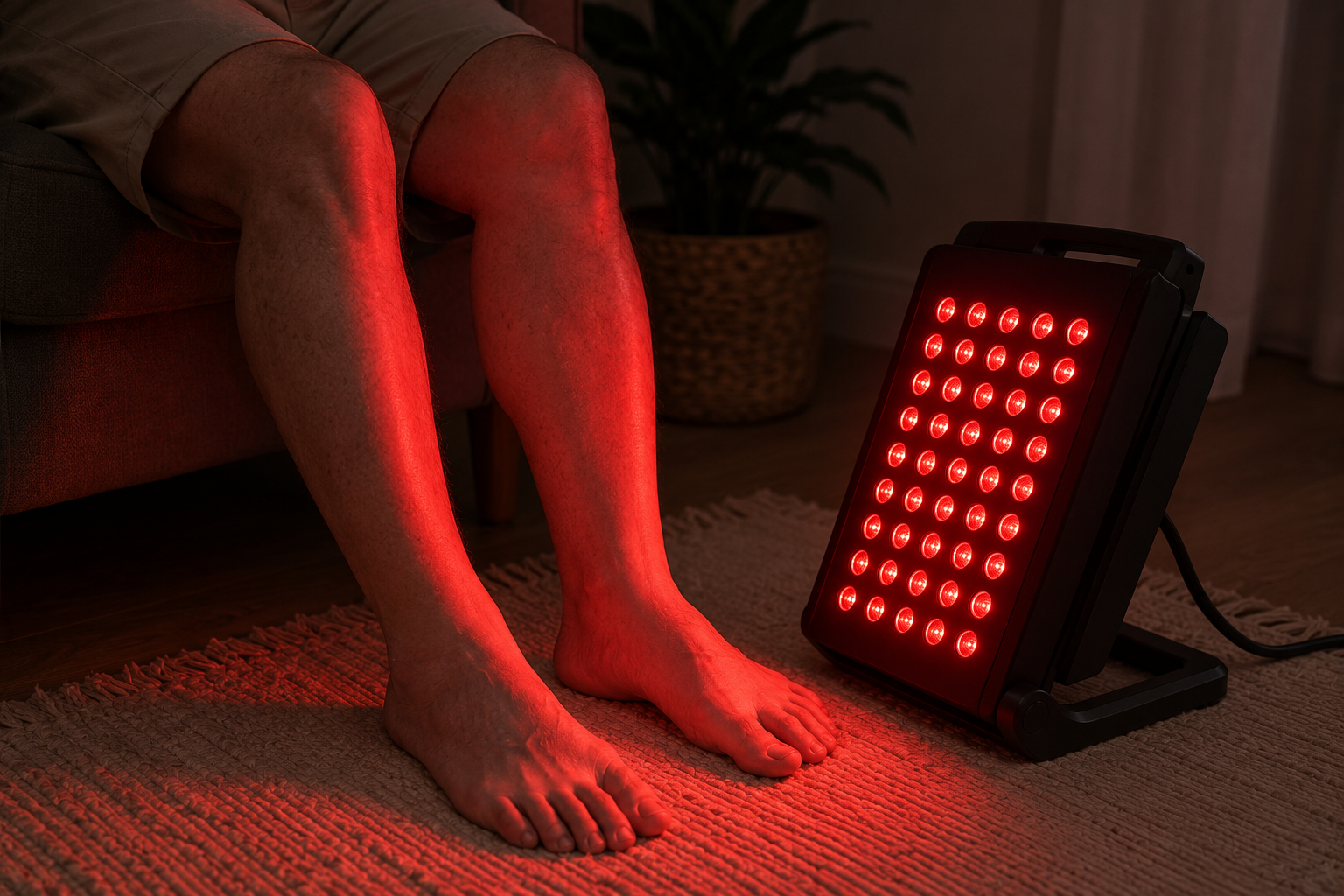
Red light therapy (also called low-level laser or photobiomodulation) has genuine but early and mixed research for neuropathy. Small studies report improvements in pain and sometimes sensation, with the proposed mechanism being that specific light wavelengths influence cellular energy production and local circulation. It's a plausible option worth discussing with your doctor — not a proven treatment, and not a substitute for addressing the underlying cause.
I want to give this a fair hearing, because it deserves one. Unlike a vibrating footbath, red light therapy has a real scientific rationale and actual clinical studies. The problem isn't that it's nonsense — it's that the gap between "promising early research" and "buy this $400 panel and your nerves will regrow" is enormous, and the marketing lives in that gap.
The proposed mechanism (and why it's plausible)
The theory: certain wavelengths of red and near-infrared light penetrate tissue and are absorbed by structures in your cells involved in energy production. The idea is that this boosts cellular energy, improves local circulation, and dials down inflammation — which could support tissue repair.
That's a legitimate hypothesis with laboratory support behind it. Note the careful wording though: this is an area of active study, not settled fact.
What the studies actually found
- Multiple small trials of low-level laser/light therapy in diabetic and other neuropathies report reductions in pain scores.
- Some studies report improved sensation; others show little difference from sham treatment.
- Protocols vary wildly — wavelength, power, session length, number of sessions — which makes results hard to compare and hard to reproduce at home.
- Larger, definitive trials are lacking.
Fair summary: promising signal, inconsistent results, early evidence base. Anyone telling you it's proven is overselling; anyone calling it pure quackery is underselling.
The home-device problem
Here's what matters practically. Most published research used clinical-grade equipment with controlled parameters. The consumer market is a free-for-all — devices differ enormously in wavelength, power output, and build quality, and many make no meaningful disclosure of either.
So even if the underlying science pans out, "a red light device" is not one thing. A cheap panel off a marketplace listing may bear little resemblance to what was studied. If you buy, look for stated wavelength and power output — and be skeptical of any product that hides them behind claims.
Safety, and the one caution for numb feet
Red light therapy is generally considered low-risk when used per instructions. Two cautions:
- Protect your eyes — don't look directly at the light source.
- Heat + numbness is the real hazard. Some devices warm the skin. If you can't fully feel your feet, you may not notice a burn developing. Keep sessions to the recommended length, maintain the recommended distance, and check your skin afterward.
Talk to your doctor first, particularly with diabetes, reduced sensation, or if you're pregnant or on photosensitizing medication.
How I'd think about the money
If you have $300 to put toward your nerves, here's an honest priority order:
- Get the tests first — A1c and B12. Finding a correctable cause beats any device.
- Blood sugar control, if that's your driver — the single highest-leverage move.
- Movement — free, and better evidenced than most devices.
- Nutrient support for the nerve itself.
- Then consider a device, if budget allows and you've covered the above.
Red light, even in the best case, works on tissue from the outside. It doesn't supply the B vitamins your myelin is built from, and it doesn't fix what's driving the damage. That's a different job — the one researchers have been studying a specific nutrient combination for.
Before spending hundreds on a device — cover the nerve itself first.
See the nerve-support approach for people who've tried everything →When to see a doctor
Discuss red light therapy with your doctor before starting, especially with diabetes, reduced sensation, pregnancy, or photosensitizing medications. Stop and seek care for any skin reaction, burn, or wound — and don't let a device delay investigating the underlying cause of your neuropathy.
Frequently asked questions
Does red light therapy work for neuropathy?
There is real research — mostly small studies of low-level laser and light therapy reporting improvements in pain and sometimes sensation. But the evidence base is early and mixed, with varied devices and protocols. It's a plausible option worth discussing with your doctor, not a proven fix.
How does red light therapy supposedly help nerves?
The proposed mechanism is that specific light wavelengths reach tissue and influence cellular energy production and local circulation, which may reduce inflammation and support tissue repair. This is a reasonable hypothesis under active study rather than settled science.
Is red light therapy safe for neuropathy?
Generally considered low-risk when devices are used per instructions. The main cautions are eye protection, and being careful with any device that produces heat if your feet are numb — you may not feel a burn developing. Check with your doctor first.
How long does red light therapy take to work for neuropathy?
Studies typically use repeated sessions over weeks rather than one-off use. If you try it, expect a commitment of consistent sessions — and set realistic expectations, since results in the research vary considerably.
Is red light therapy worth the money for neuropathy?
That depends on your budget and expectations. The evidence is early and mixed, devices vary widely in quality and output, and it doesn't address underlying causes like blood sugar or B12 deficiency. Consider covering those basics first.
Sources
- PubMed — low-level laser therapy / photobiomodulation for diabetic peripheral neuropathy (small trials, mixed results)
- PubMed — photobiomodulation mechanisms (cellular energy, circulation)
- NINDS — Peripheral Neuropathy Fact Sheet
- NIDDK — Diabetes and foot problems (burn/injury risk with reduced sensation)
This article is for general educational purposes only and is not medical advice. It has not been evaluated by the FDA and is not intended to diagnose, treat, cure, or prevent any disease. Always consult a qualified healthcare provider before starting any new therapy or device, especially with diabetes or reduced sensation.