The Stages of Neuropathy in the Feet: What Each One Means
Nobody wants to look at where this is heading. But knowing the stages isn't about fear — it's about the clock. This thing moves in a predictable direction, and the earlier you spot which stage you're in, the more of your feet you get to keep. So let's find you on the map — honestly.
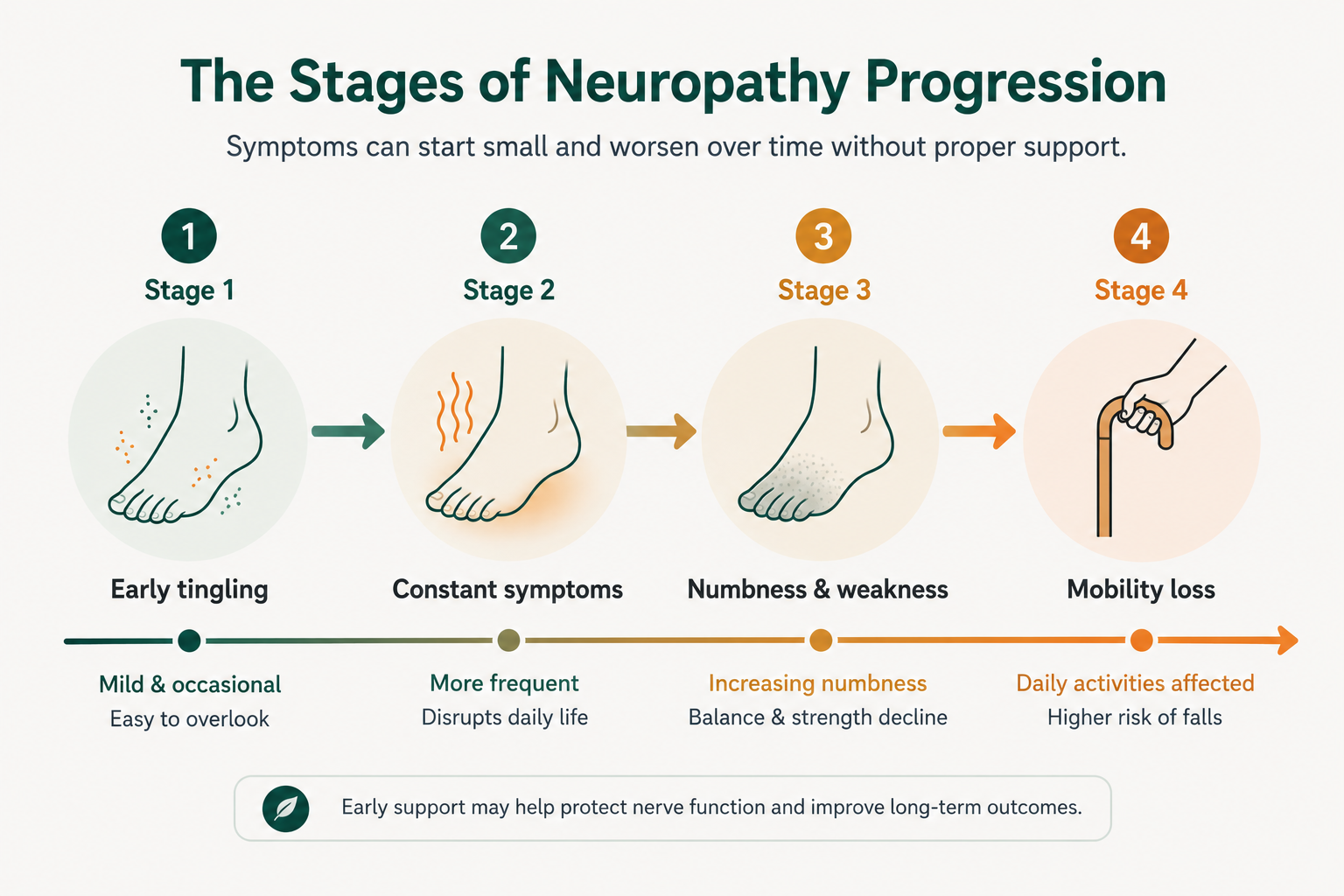
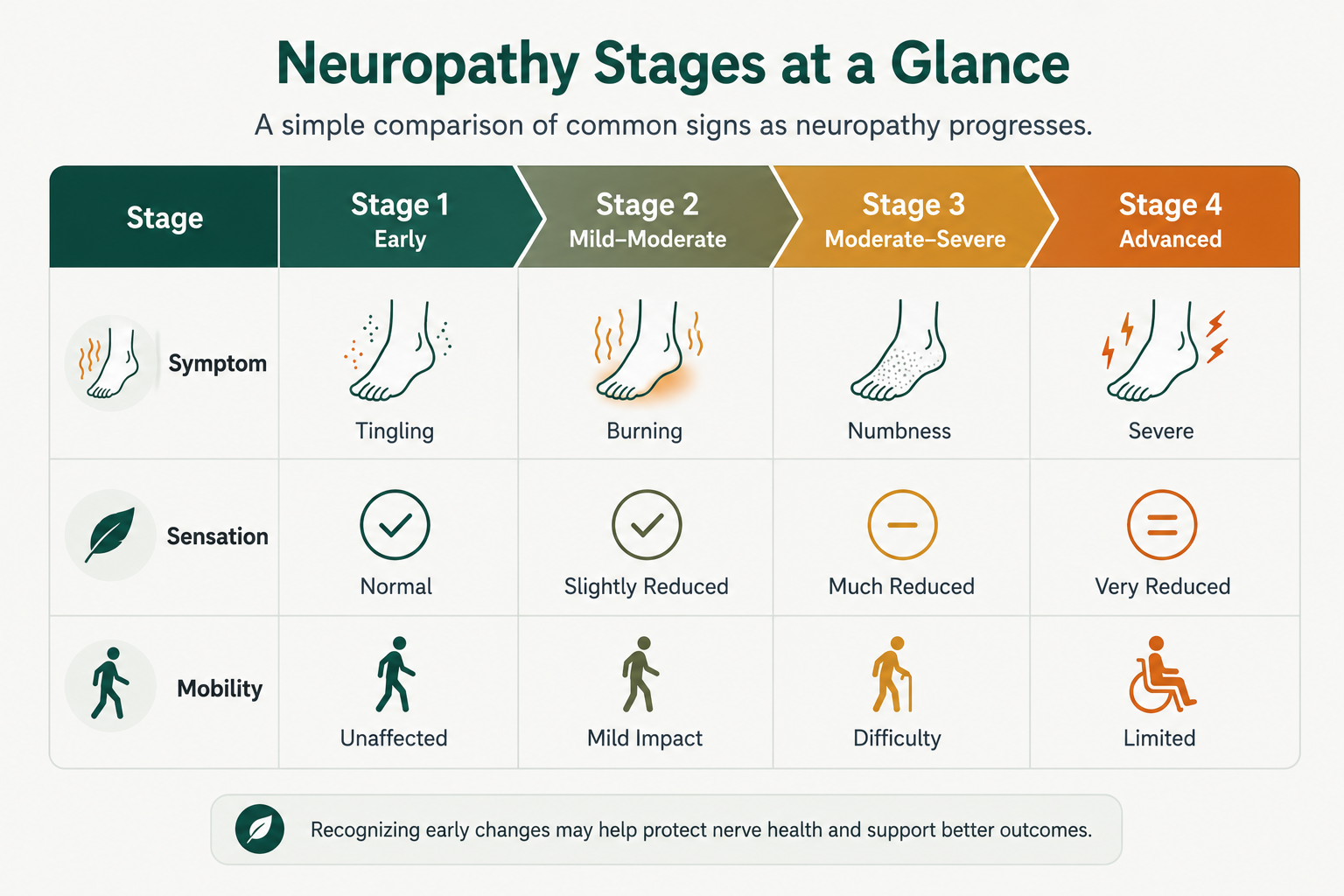
Peripheral neuropathy usually progresses gradually, in recognizable phases: early, on-and-off tingling; then constant burning and pain; then numbness and weakness as nerve fibers drop out; and, left alone, loss of sensation and balance that threatens your mobility. How fast it moves depends on the cause — but symptoms climbing from the toes upward are the signal to act early, while there's still healthy nerve to protect.
Here's what the stages really tell you: this isn't a coin flip. Neuropathy has a direction of travel, and every month it's ignored, it moves a little further up the road. The single biggest thing you control is how early you get in front of it. So read down until you recognize yourself.
Why it moves in stages at all
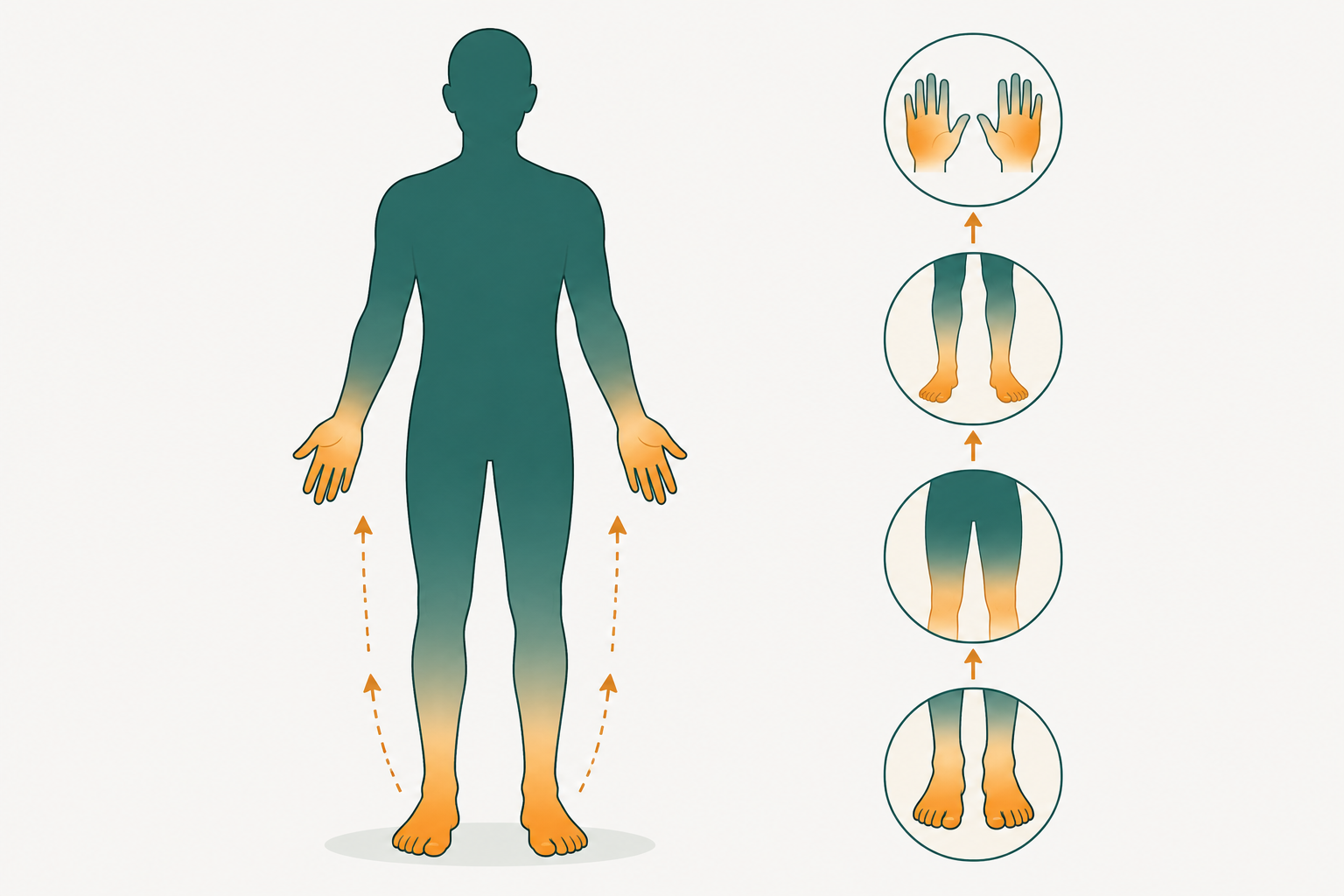
Neuropathy comes for the longest nerve fibers first — the ones stretching down to your toes. That's why it opens in the feet and creeps up. And as more fibers fall, the kind of symptom shifts too: from "too much" (tingling, burning) toward "too little" (numbness, dead spots).
But hear this clearly: the road is not one-way and it is not fixed. How fast you travel it — and whether you can hit the brakes — rides almost entirely on the cause and how early you move.
Stage 1: The whisper (early, on-and-off)
This is the stage almost everyone ignores — and the one where you have the most power.
- Occasional tingling or "pins and needles" in the toes
- Symptoms that come and go, often at night or after sitting
- Mild enough to blame on "tired feet" or bad shoes
Act here and you're fighting on the best possible ground: the damage is still small, and depending on the cause, more of it may be reversible than at any later point. If this is you — this is your moment.
Stage 2: The nag (regular, most days)
- Burning, throbbing, or sharp jabs most days
- Electric-shock zaps shooting through feet or legs
- Sleep starts to fray as the nights get louder
- You quietly start rearranging your day around it
Stage 3: The retreat (numbness and weakness)
Now the story flips from pain to loss:
- Spreading numbness — patches that feel dulled or gone
- Weakness in the feet or legs
- Trouble feeling the floor, uneven ground, or the gas pedal
- Small cuts and blisters you never notice
This stage carries a hidden danger: you can't feel what you can't feel. Unnoticed wounds are a real threat here, especially with diabetes.
Stage 4: The wall (major sensation and mobility loss)
- Deep loss of sensation in the feet
- Balance gone shaky — the fall risk everyone dreads
- Mobility shrinking; independence on the line
This is the stage that keeps people up at night. And it's the exact reason the whole point is to move while you're still back at Stage 1 or 2 — while there's still so much to protect.
How fast will it move for you?
No single clock — and that's honest, not a dodge. Your speed depends on:
- The cause (uncontrolled diabetes floors it; a corrected deficiency can stall it)
- How early you act
- Your blood sugar, nutrition, and inflammation
For some it crawls over years. For others it sprints. The one universal lesson: symptoms actively climbing mean the process is live, right now — and that's your cue to move, not wait.
What your stage is really telling you
Wherever you landed on that map, the message is the same — and it's more hopeful than the fear whispers. The biggest drivers of this climb — blood sugar, B-vitamin status, inflammation — are levers you can actually pull. Staging isn't a countdown to the wall. It's a map of how much road you've still got. So use it.
When to see a doctor
Get evaluated at any stage — earlier always wins. And go now for sudden or fast-worsening numbness or weakness, any non-healing foot wound or color change (especially with diabetes), or new balance loss.
Frequently asked questions
What are the stages of neuropathy?
It generally moves from early, on-and-off tingling, to constant burning and pain, to numbness and weakness, and finally to serious loss of sensation and balance if nothing's done. How fast — and whether you can slow it — comes down to the cause and how early you catch it.
How fast does neuropathy progress?
It varies a lot. Uncontrolled drivers like high blood sugar tend to move faster; a corrected deficiency may stall out. Symptoms creeping up from the toes are the sign it's still active — and worth acting on now.
Can you stop neuropathy from getting worse?
Often, yes — especially when the cause is caught early and dealt with, like reining in blood sugar or fixing a B12 deficiency. There's no guaranteed cure, but slowing or halting the slide is a realistic goal for many people.
What stage of neuropathy is numbness?
Numbness usually marks a later stage than early tingling — it means more nerve fibers have gone quiet. It also raises the risk of injuries you can't feel, which is its own hazard.
Does neuropathy always get worse?
No. Progression hinges on the cause and how early it's managed. Some people stabilize or improve once the driver is handled; others slide if it's ignored.
Sources
- NINDS — Peripheral Neuropathy Fact Sheet (20M+; longest-nerves-first pattern)
- Mayo Clinic — Peripheral neuropathy (symptom progression, red flags)
- ADA / NIDDK — diabetic neuropathy progression and foot-injury risk
- PubMed — natural history / progression of peripheral neuropathy
This article is for general educational purposes only and is not medical advice. It has not been evaluated by the FDA and is not intended to diagnose, treat, cure, or prevent any disease. Always consult a qualified healthcare provider about your symptoms.